


If your pipeline depends on search, this shift is already affecting your results. Learning how to appear in ChatGPT answers now plays a direct role in lead quality, deal velocity, and how your brand is positioned against competitors.
Read >
If you’re leading a growing company, you’ve probably heard some version of this recently:
Read >.jpg)
Search is no longer just about rankings. It is about whether your business shapes the answers buyers see before they ever visit your website.
Read >
Artificial intelligence is now part of the business conversation, not just the tech conversation. It is no longer an experiment inside the marketing department. It directly impacts how leadership teams evaluate efficiency, content production, customer experience, and competitive positioning.
The real issue is not whether your business should use AI. It is whether your team understands how ChatGPT gets information well enough to use it without creating risk.
Read >.jpg)
Search is no longer just about rankings. It is increasingly about whether your brand helps shape the answers buyers see before they ever visit your website.
Read >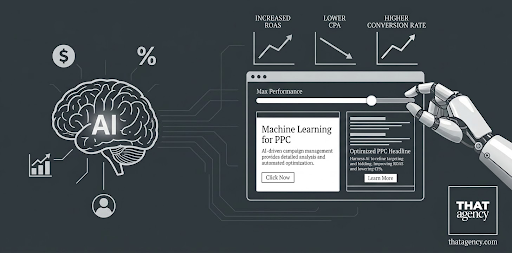
Paid advertising has changed a lot over the last several years. Running campaigns is no longer just about choosing a few keywords, writing ads, and adjusting bids every once in a while. Today, ad platforms use machine learning to help marketers make smarter decisions faster. That is why AI PPC management has become such an important part of modern digital advertising.
Read >
An AI marketing audit gives business leaders a clear way to understand what is really happening inside their digital marketing. Instead of guessing which channels work or relying on disconnected reports, AI helps analyze patterns across traffic, content, ads, and conversions at once. That clarity matters when growth, budget efficiency, and lead quality are on the line.
Read >
AI isn’t here to replace your SEO strategy, it’s here to sharpen it.
Keyword research has always been the foundation of successful SEO campaigns. But the process can be time-consuming, inconsistent, and difficult to scale, especially for teams juggling multiple websites or service areas. That’s where AI keyword research comes in, and it plays a growing role in modern workflows discussed in our breakdown ofAI marketing tools.
Read >
Here's a situation you'll probably recognize. Your marketing team just published content on five different channels. The blog post sounds super professional. Your Instagram caption is casual and fun. The email newsletter reads like a boring corporate memo. And your chatbot? It's talking like a completely different company. Sound familiar? You're not alone. As more businesses use AI brand voice tools to create content faster, keeping everything sounding like "you" has become really tough.
Read >.jpg)
Artificial intelligence is changing how businesses create visuals for their marketing. One of the most popular tools today is AI image generation, which lets marketers produce images quickly and at a low cost. For businesses in the consideration stage, those comparing different marketing solutions, AI can look like a simple fix for creating more content in less time. But like any tool, it comes with strengths and limits.
Read >
2000 Palm Beach Lakes Blvd
Suite 601
West Palm Beach, FL 33409
P: 561.832.6262
F: 561.832.7707


