

Artificial intelligence is now part of the business conversation, not just the tech conversation. It is no longer an experiment inside the marketing department. It directly impacts how leadership teams evaluate efficiency, content production, customer experience, and competitive positioning.
The real issue is not whether your business should use AI. It is whether your team understands how ChatGPT gets information well enough to use it without creating risk.
That distinction matters.

Too many companies treat AI like a smarter search engine or an always-correct assistant. It is neither. Used well, ChatGPT accelerates production and supports decision-making. Used poorly, it produces confident-sounding content that introduces inaccuracies and scales bad assumptions.
For executives, understanding how ChatGPT gets information is a business issue. It affects content quality, brand credibility, operational risk, and ROI.
This guide explains how ChatGPT gets information, how LLMs find information differs from search engines, where risks exist, and how to decide when AI should lead versus when human oversight is required.
When executives ask about how ChatGPT gets information, they are really asking:
Those are the right questions.
Many teams are using AI to move faster. But speed alone is not a strategy. Without understanding the difference between generated output and verified information, AI increases activity while weakening quality control.
Example:
In one case, AI was used to scale blog production. Output increased, and traffic followed. However, early on, we identified that conversion rates were not keeping pace. The content was generating visibility, but lacked the depth and differentiation needed to drive action.
We adjusted the strategy: shifting from volume to value. By strengthening content quality, aligning messaging with decision-stage intent, and implementing stronger internal linking and CTAs, the client saw improvements not just in traffic, but in lead quality and conversions.
The takeaway is clear: AI increases the need for strategic judgment, but it does not replace it.
ChatGPT does not “look things up” like a person. It is not reviewing sources unless connected to external tools. In its base form, it generates responses from learned patterns.
The real question is not whether it can answer, but whether the answer is:
Skip that distinction, and AI becomes a trust liability.
Understanding how ChatGPT gets information starts here: it does not operate like Google.
Search engines retrieve information.
ChatGPT generates it.
That difference is not minor: it changes how the tool should be used.
Google:
ChatGPT:
So when asking how ChatGPT gets information, the real answer is: it relies on learned patterns unless connected to live systems.
That is why strong output can still be incomplete.
To understand how LLMs find information, stop thinking of “finding” as retrieval.
Large language models generate responses based on probability and context. That means how LLMs find information is really about interpretation, not lookup.
When businesses misunderstand this, they make one of two mistakes:
The right approach is disciplined:
Why This Matters in Business
This difference drives real outcomes.
AI works well for:
It creates risk for:
Example:
A company used AI to draft service pages, including outdated compliance language. The content looked credible, but required a full rewrite after legal review, delaying launch and increasing cost.
Businesses that understand AI limits scale faster without eroding trust. Those that do not pay for it in rework and weak messaging.
At a high level, how ChatGPT gets information comes down to:
The foundation of how ChatGPT gets information is training.
The model learns patterns across large datasets, not specific stored answers.
It understands:
This enables fast, structured output.
But pattern recognition is not validation.
Use AI for:
Do not rely on it alone for:
Another key part of how ChatGPT gets information is refinement through human feedback.
This improves:
But it does not eliminate uncertainty.
A well-written answer can still be:
AI scales whatever review process you apply. Weak review = scaled mistakes.
The third component of how ChatGPT gets information is continuous model improvement.
This enhances:
But it does not mean real-time learning from every interaction.
AI may still lack:
If recency matters, verify.
A major misconception about how ChatGPT gets information is that it always uses live data.
By default, it does not.
It can be connected to:
That distinction matters.
A base model generates.
A connected system supports decisions.
Why This Matters for Marketing Strategy
Understanding how ChatGPT gets information should directly shape your marketing approach.
Weak content is easier to ignore in an AI-driven environment.
To compete, content must be:
Publishing more content is not enough.
Authority comes from:
AI is strongest in:
It is weakest in:
A key part of how LLMs find information is context.
They connect related ideas, not just match keywords.
If someone asks about lead quality, the model may connect:
This is why depth, not keyword stuffing, wins.
Fluent output can bypass scrutiny.
AI can weaken differentiation with generic messaging.
More content does not equal more results.
AI does not level the playing field because execution still matters.
AI is moving toward connected systems:
This increases value, but also risk.
The advantage will go to companies using AI intentionally, not aggressively.
Understanding how ChatGPT gets information is essential for using AI without weakening trust or quality.
ChatGPT generates responses from learned patterns. It does not function like a verified search engine. That makes it powerful, but also risky when misused.
The strongest companies use AI as an amplifier, not a replacement for expertise.
If your team is producing more content but not seeing an increase in qualified leads, conversions, or search visibility, the issue is not effort: it is strategy.
THAT Agency helps businesses identify where AI is creating noise instead of impact, and builds systems that turn AI into a measurable growth driver.
The next step is not using AI more. It is using it correctly.
Tags: chat GPT, AI in digital marketing, AI for marketers, AI copywriting, AI Tools
What Is Organic Traffic? (Complete Beginner Guide)
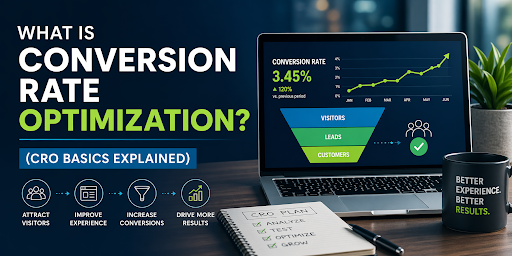
What Is Conversion Rate Optimization? (CRO Basics Explained)
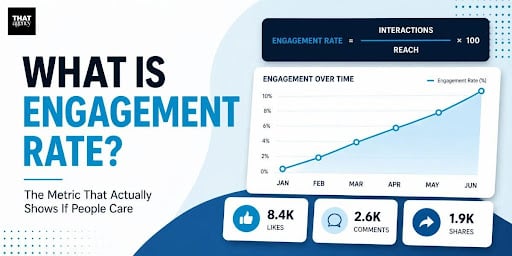
What Is Engagement Rate? (Marketing Metric Explained)

How to Appear in ChatGPT Answers: Understanding AI Citation Signals

AI-Generated SEO Content at Scale: Why Output Without Strategy Damages Authority

700 S. Rosemary Ave.
Suite 204-707
West Palm Beach, FL 33401
P: 561.832.6262
F: 561.832.7707


