

If your pipeline depends on search, this shift is already affecting your results. Learning how to appear in ChatGPT answers now plays a direct role in lead quality, deal velocity, and how your brand is positioned against competitors.
Buyers are no longer comparing ten different websites. They ask one question and move forward with the answer they trust. That answer often includes a small group of companies, sometimes just one.

That creates a very different dynamic:
When your business is not included, the issue goes beyond traffic. You are missing influence at the exact moment decisions are being shaped.
This is a shift in how authority is evaluated, not just another SEO update.
Most companies are still focused on rankings. Meanwhile, AI systems are selecting a short list of brands they can confidently reference.
That decision is based on patterns across your entire digital presence, not just one page.
When those patterns are weak or inconsistent, the outcome is predictable:
This shift is already visible in B2B and high-consideration industries. The downstream impact shows up quickly:
At this point, understanding how to appear in ChatGPT answers is tied directly to revenue performance.
There is no single tactic that fixes this. Visibility comes from structure, consistency, and depth working together.
Most companies try to solve this with more content. That usually makes the problem worse.
A better approach is to focus on the areas that actually influence selection, in the right order.
Publishing content is not the same as building authority. AI systems are looking for clear ownership of a topic, not scattered coverage.
When your content spreads across too many areas or lacks a clear center, it becomes difficult for AI to associate your brand with any one category.
That is where many strategies break down.
A stronger approach starts with focus:
In practice, this means creating a system rather than a collection of pages.
Your structure should include:
Content that does not support a core topic or move a buyer forward should be reconsidered. That is often where noise enters the system.
When this step is skipped, content competes internally. AI cannot determine your primary focus, and competitors with cleaner structures become easier to trust.
A mid-sized B2B company scaled content quickly using AI. Over 100 blog posts were published in six months. Traffic increased slightly, but leads dropped.
A closer look showed:
From an AI perspective, the brand lacked clarity.
After restructuring:
Within 90 days:
The shift came from structure, not volume.
Ranking alone does not guarantee visibility in AI responses. Content also needs to be usable.
AI systems extract information. They do not interpret loosely written content. If your message is indirect or buried under filler, it will be skipped.
Clear, structured answers perform better.
Focus on:
A simple way to evaluate content is to ask:
“Can this section stand on its own as an answer?”
If it cannot, it likely needs to be tightened.
Here is how that plays out in practice:
Weak:
“Brand consistency is important for online success.”
Stronger:
“AI systems rely on consistent business names, service descriptions, and positioning across your website and external profiles. When those elements match, your brand becomes easier to recognize and more likely to be cited.”
The difference is clarity. One statement is general. The other is usable.
When this step is overlooked, content may still rank, but it will not appear in AI-generated answers. That limits visibility at a critical stage of the buying process.
Before adding more content, it is worth looking at how your brand appears across platforms.
AI systems compare multiple sources to validate what they see. If your messaging changes from one place to another, your credibility weakens.
This often happens without being noticed.
Common issues include:
Cleaning this up has a direct impact on visibility.
Start by reviewing:
Each of these should reinforce the same core message.
According to THAT Agency’s positioning, consistent messaging across platforms supports recognition and trust, both of which influence visibility .
When messaging is aligned, AI has a clearer understanding of your business. When it is not, your brand becomes harder to define and less likely to be recommended.
Internal linking plays a bigger role than most teams expect. It helps define how your content is organized and which topics matter most.
Without it, even strong content can appear disconnected.
A well-linked structure shows:
Instead of thinking of links as navigation, think of them as signals.
A clear approach includes:
When linking is inconsistent or missing, AI sees fragments rather than a complete system.
Your website is only part of the picture. AI systems also look at how your brand appears elsewhere.
External mentions help confirm credibility.
These can come from:
What matters here is relevance. A few strong signals in the right places are more valuable than a large number of weak ones.
When evaluating opportunities, it helps to ask whether a platform strengthens how your brand is understood within your industry.
Without external validation, your presence remains limited. Competitors with broader recognition are easier for AI to trust.
A regional service company had solid content but very little presence outside its website. Despite ranking for key terms, it was not appearing in AI responses.
The focus shifted to validation:
Within two months:
No new content was added. Visibility improved through stronger signals.
Brand visibility in ChatGPT is shaped by recognition and clarity.
AI systems tend to prioritize brands that:
This changes the competitive landscape.
Instead of competing for clicks, you are competing to be selected.
If you are evaluating your current position, a focused approach works best:
Jumping straight into content production often leads to more noise instead of better visibility.
Tracking how to appear in ChatGPT answers requires a different mindset.
Instead of rankings alone, look at:
Running controlled prompts each month can help establish a baseline and track improvement over time.
Some companies are already adapting to this shift. Others are still focused on traditional metrics.
That gap is becoming more visible.
On one side are brands with clear structure and consistent messaging. On the other are brands that are active but harder to define.
AI systems favor the first group.
Improving how to appear in ChatGPT answers requires a shift in approach.
The focus moves from producing more content to building a clearer system.
That system includes:
The risk is not slow decline. It is reduced visibility in the spaces where decisions are already happening.
If you want to understand where your current gaps are and how they impact your visibility, the next step is to evaluate your structure, messaging, and authority signals.
THAT Agency can help identify those gaps and build a strategy that improves brand visibility in ChatGPT while supporting stronger, more qualified pipeline growth.
Tags: AI, AI Marketing, AI in business, AI Tools
What Is Organic Traffic? (Complete Beginner Guide)
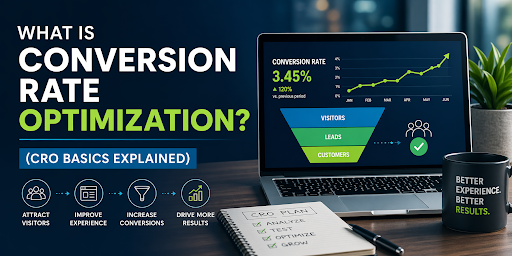
What Is Conversion Rate Optimization? (CRO Basics Explained)
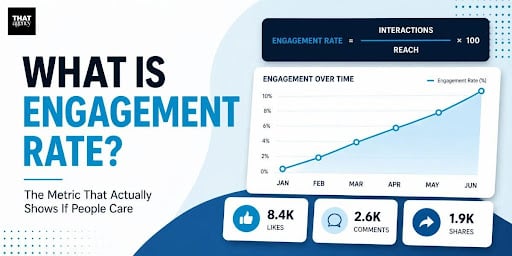
What Is Engagement Rate? (Marketing Metric Explained)

How to Appear in ChatGPT Answers: Understanding AI Citation Signals

AI-Generated SEO Content at Scale: Why Output Without Strategy Damages Authority

700 S. Rosemary Ave.
Suite 204-707
West Palm Beach, FL 33401
P: 561.832.6262
F: 561.832.7707


