

AI has removed the bottleneck in content production. That shift has created opportunity, but it has also exposed a bigger problem most companies are not prepared for.
Scaling AI-generated SEO content without a clear structure does not lead to growth. It creates dilution. Rankings plateau. Lead quality drops. The brand becomes harder to trust because the message is no longer clear.

This is not about content volume. It is about positioning.
Search engines and AI systems are now selecting sources they can confidently reference. If your content does not show clear authority, it is simply ignored. The companies gaining visibility today are not publishing more. They are publishing with direction.
Content production is no longer the challenge. Alignment is.
When content is scaled without structure, patterns start to emerge quickly. Pages begin to overlap. Messaging shifts depending on the page. Articles start to repeat the same surface-level ideas. Internal links do not support a larger strategy. Traffic may increase, but conversions do not follow.
Over time, this creates a site that feels inconsistent. That inconsistency is what search engines and AI systems pick up on first.
Instead of strengthening authority, the site signals confusion.
The risk is not just underperformance. It is erosion.
Poorly structured AI-generated SEO content weakens your authority over time. That has direct business consequences:
At that point, content is no longer supporting growth. It is creating friction.
AI systems are not evaluating content page by page. They are looking for patterns across your entire site.
They are trying to answer one question: can this brand be trusted as a source?
That decision is based on signals like:
If your content does not reinforce these signals, it does not get selected. Volume does not change that outcome.
The shift is simple. Visibility now depends on clarity.
Publishing content and building authority are not the same thing.
More pages can increase activity, but authority comes from connection and consistency. Without structure, output creates fragmentation. With structure, it builds momentum.
In practice, the difference is clear:
When content does not reinforce a central position, it works against you.
A mid-sized B2B company scaled to over 120 AI-assisted blog posts in six months. Traffic increased slightly, but lead volume stayed flat.
Once the content was audited, the underlying issues were easy to spot:
Rankings stalled. Conversion rates dropped.
After restructuring the content into three focused topic clusters, consolidating overlapping pages, and aligning everything with service priorities, the results shifted quickly:
The difference was not output. It was structure.
If you are going to scale content, you need a system that controls how everything fits together.
Most teams increase production without defining how content supports pipeline or positioning. That is why results stall.
A stronger approach starts with a clear structure and builds from there.
Start with what drives the business, not what looks good in a keyword tool.
Focus on:
This step filters out noise and keeps your content tied to outcomes that matter.
A simple rule helps here. If a topic does not connect to revenue or qualified demand, it is not a priority.
Most content strategies skip this and pay for it later.
Instead of starting with blogs, build strong pillar pages that define your position and anchor your topics. These pages should guide how everything else is created.
They act as the central point for authority. Supporting content should connect back to them, not compete with them.
When pillar pages are weak, scaling content creates fragmentation. When they are strong, each new piece reinforces the same signal.
Content without purpose is easy to produce and easy to ignore.
Every piece of AI-generated SEO content should serve a defined role. That role should connect directly to how buyers think and make decisions.
Strong supporting content usually falls into a few categories:
If a piece does not help someone move closer to a decision, it is not adding value.
Internal links are not just there for navigation. They shape how your content is understood.
A strong structure connects:
This creates a clear path through your content. Without it, even strong articles feel disconnected.
From an AI perspective, that connection is critical. It helps systems understand what you are actually known for.
This is where most AI-generated content falls short.
Content can read well and still fail to perform. If it lacks a clear point of view or does not connect to your services, it does not build authority.
Editing should focus on:
A useful test is simple. If the content could sit on a competitor’s site without changes, it is not strong enough.
Most companies are still measuring output.
They track how many articles are published, how many keywords are targeted, and how many pages are indexed. Those numbers can go up while performance stays flat.
What they are not measuring is:
This creates the illusion of progress. Activity increases, but authority does not.
That gap is where competitive advantage is being built.
If your content is not delivering results, the answer is not to create more.
Start here:
This is how you turn content into a system instead of a collection of pages.
If any of these sound familiar, your content structure likely needs attention:
These are not surface-level issues. They point to a lack of clear authority.
Most teams do not need to rebuild everything. They need to reorganize.
Start by:
These changes often produce faster results than publishing new content.
AI has made content easier to produce. It has also made weak strategy easier to spot.
If your AI-generated SEO content is not building authority, it is likely working against you.
The companies gaining ground are not producing more. They are producing with structure, clarity, and intent.
At THAT Agency, we focus on building systems that connect content directly to lead quality, pipeline growth, and long-term performance .
If your current content strategy feels active but not effective, that is the signal.
The next move is not more content. It is a better system.
Tags: Content Marketing, AI, AI Marketing, AI content tools
What Is Organic Traffic? (Complete Beginner Guide)
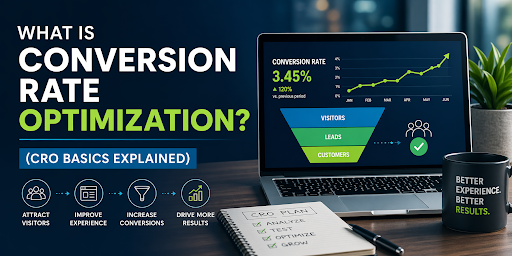
What Is Conversion Rate Optimization? (CRO Basics Explained)
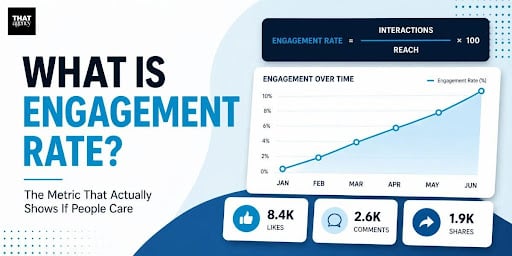
What Is Engagement Rate? (Marketing Metric Explained)

How to Appear in ChatGPT Answers: Understanding AI Citation Signals

AI-Generated SEO Content at Scale: Why Output Without Strategy Damages Authority

700 S. Rosemary Ave.
Suite 204-707
West Palm Beach, FL 33401
P: 561.832.6262
F: 561.832.7707


