

Search is no longer just a traffic acquisition channel. It is now a visibility, influence, and qualification channel.
For years, the playbook was simple: rank well, win the click, drive traffic, and convert visits into leads. That still matters. But it is no longer enough. Buyers are now using AI-powered search experiences to summarize options, compare vendors, and clarify decisions before they ever visit a website. Google says AI Overviews now reach more than 1 billion users monthly, which makes this shift too large for growth-focused businesses to treat as experimental.
That is why understanding AI search vs traditional search has become a business issue, not just an SEO topic. The real question is not whether AI is changing search. It is whether your company is becoming easier to find, easier to trust, and easier to choose as that change happens.

The discussion around AI replacing traditional search matters for one reason: it forces leadership teams to rethink where demand is shaped. Traditional search still captures high-intent demand. AI search is increasingly shaping demand earlier in the journey. Businesses that do not adapt risk losing visibility before the sales conversation even begins.
Traditional search remains critical because it performs well when intent is clearer, and action is closer to hand. It still works exceptionally well for:
That is why strong SEO fundamentals still matter. Technical health, crawlability, page quality, internal linking, and authority signals remain essential to earning visibility in Google Search. Google’s own SEO documentation still centers on these fundamentals because search engines still need to crawl, understand, and rank your content effectively.
But traditional search no longer controls the full research path.
Buyers now ask AI tools to explain categories, compare approaches, and summarize tradeoffs before they click into a site. In practical terms, that means your website often enters the process later, after the prospect has already formed assumptions about what matters and who seems credible. Google explicitly describes AI Overviews as providing users with an AI-generated snapshot with links to dig deeper, reflecting this “answer first, visit later” behavior.
That is the strategic shift: search is no longer just about owning the click. It is about influencing the decision before the click.
The biggest difference in AI search vs traditional search is not that one uses links and the other uses AI. It is that each rewards visibility differently.
Traditional search rewards ranking and click-through. AI search rewards usefulness, structure, and extractable insight.
Google’s guidance for site owners makes this clear. Its documentation on AI features explains that AI Overviews and AI Mode are extensions of Search and that site owners should continue focusing on unique, satisfying content for people. Google also notes that AI features show links in multiple ways and can surface a wider range of sources. In other words, content does not just compete to rank; it competes to be cited and used.
That creates a more demanding environment for businesses. Pages that are vague, inflated, or self-promotional are harder for both users and AI systems to trust. Pages that are clear, specific, and structured around real buyer questions are easier to surface.
Most explanations of AI search vs traditional search spend too much time on basics. For business leaders, the more useful lens is this: how does each model affect qualified visibility, buyer trust, and pipeline outcomes?
Traditional search presents options. AI search often presents a synthesized answer first.
That matters because the first framing of the issue often shapes the rest of the buying journey. In traditional search, the user compares several listings and decides where to click. In AI search, the platform may summarize the issue before the user reviews individual sites at all.
That means your content is not just competing for traffic. It is competing to shape the answer.
Google’s rollout of AI Overviews is one of the clearest examples of this shift. Google says AI Overviews now reach over 1 billion users monthly, and it has added more prominent links, including in-line links and desktop link panels, to connect users back to publishers and businesses. That tells marketers two things at once: Google still wants users to visit the web, but it increasingly wants to mediate the first layer of the answer.
For businesses, the implication is straightforward: if your content is not structured well enough to be surfaced in AI-led experiences, your visibility may drop before the website visit ever has a chance to happen.
Keyword strategy is still foundational. That has not changed.
What has changed is that intent now matters more than ever. Buyers are not only typing short phrases. They are asking layered questions tied to commercial goals, operational constraints, and risk reduction.
Instead of searching “best marketing agency,” they may ask, “What kind of agency helps a multi-location company improve lead quality without increasing wasted spend?”
That is not just a keyword query. It is a decision query.
Google’s support documentation for AI search experiences and AI Mode describes how these systems can break questions into subtopics and search for each part. That means content built only around phrase repetition is less likely to perform than content built around full-question coverage and clear decision support.
The practical takeaway is simple: do not just target terms. Target the actual decision the buyer is trying to make.
One of the biggest reporting mistakes businesses can make right now is treating traffic as the only reliable sign of search performance.
In traditional search, traffic was often the clearest evidence of visibility. In AI search, influence can happen earlier and more quietly. A buyer may encounter your brand in an AI-generated answer, absorb your point of view, and return later through a branded search, direct visit, or sales conversation.
That does not make traffic irrelevant. It makes traffic incomplete.
Microsoft’s Bing Webmaster Tools now includes an AI Performance dashboard that shows when a site is cited in AI-generated answers across Microsoft Copilot and Bing experiences. The dashboard tracks total citations, cited pages, and query phrases tied to those AI answers. That is a strong signal that visibility in AI experiences is now measurable as something broader than standard search clicks alone.
For leadership teams, this has a direct implication: if your reporting still stops at rankings, sessions, and form fills, you may be under-measuring how search contributes to awareness and pipeline quality.
The better measurement model includes:
In traditional SEO, ranking high has always mattered because clicks are concentrated near the top of the page.
That is still true. But AI search increases the leverage of relevance, specificity, and usefulness. A page does not always need to be the number one organic result to influence an AI-generated answer. It needs to be more directly aligned with the question and more useful than competing content.
Google’s guidance on succeeding in AI search emphasizes creating unique, satisfying content for people and notes that AI Overviews can show a wider range of sources on the results page. That makes clarity and completeness a more powerful competitive advantage than many businesses are used to.
This creates an opportunity for focused firms with real expertise. It also creates risk for companies relying too heavily on domain authority while publishing generic content.
Authority still helps. Relevance increasingly determines whether your content gets used.
Traditional search often works in separate steps: search, click, return, refine.
AI search behaves more like an ongoing conversation. The user asks a question, gets an answer, then immediately asks the next logical question. Google’s AI Mode documentation explicitly describes this flow, including more advanced reasoning and multi-part exploration.
That means the real competition is no longer just over who answers the first question. It is over who supports the next question, and the one after that.
For businesses, this changes content strategy in a meaningful way. Content has to move beyond definitions and into decision support. Strong pages should help buyers understand:
That is especially true for executive audiences. Sophisticated buyers are not looking for more research work. They are looking for clarity faster.
This is still the question many businesses ask first.
Is AI replacing traditional search?
Not completely. Traditional search remains highly valuable for bottom-funnel intent, local discovery, and vendor evaluation. But AI is replacing a meaningful share of the early-stage research behavior that used to happen through multiple manual searches. Google’s AI search documentation and product updates make that direction clear, and Microsoft’s AI reporting tools show that platforms now treat AI-answer visibility as a distinct performance layer.
So the better answer is this: AI is not replacing all traditional search, but it is replacing parts of traditional search behavior that used to shape awareness and evaluation.
For businesses, that distinction is critical. If you only optimize for traditional SEO, you may still capture intent that already exists. But you will be weaker where demand is formed, narrowed, and influenced.
The rise of AI search vs traditional search does not make SEO less important. It makes SEO less forgiving.
Businesses that want stronger results should prioritize five things.
First, answer high-value questions, not just high-volume keywords. Focus on the questions tied to lead quality, market expansion, spend efficiency, and vendor evaluation.
Second, publish expertise rather than summaries. AI-generated content is easy to produce. Useful, specific, experience-backed content is harder to replicate and more likely to earn trust. Google’s guidance on AI-generated content reinforces that the issue is not whether AI was used, but whether the final content adds value for users.
Third, structure pages for fast comprehension. Executive buyers scan for relevance, implications, and credibility. Your content has to surface those quickly.
Fourth, build depth around topics that affect commercial decisions. Thin content loses ground faster in both traditional and AI-led environments.
Fifth, report performance in commercial terms. Rankings and traffic still matter, but they should connect to qualified leads, conversion quality, and pipeline contribution.
For most businesses, this is a better framing than “which one is better?”
Traditional search matters more when the buyer is ready to compare providers, evaluate services, or act in-market.
AI search matters more when the buyer is clarifying needs, comparing approaches, or shaping the decision before a click.
The strongest strategy uses both.
Traditional search helps capture demand.
AI search helps shape demand.
Businesses that align both to the buyer journey will be better positioned to protect visibility, improve lead quality, and stay competitive as search continues to evolve.
Understanding AI search vs traditional search is now part of building a defensible digital strategy.
And while the debate around AI replacing traditional search will continue, the more practical takeaway is this: search now influences buyers in more places, earlier in the journey, and with more direct impact on how providers are evaluated. Businesses that adapt will not just protect traffic. They will protect market position.
The companies best positioned for what comes next will:
At THAT Agency, we help businesses solve a specific problem that this shift is making worse: strong digital activity with unclear business impact. If your team is generating traffic but struggling to improve lead quality, understand where visibility is being won or lost, or connect search performance to pipeline outcomes, that is exactly the gap we help close.
If your business needs a search strategy that improves qualified visibility, reduces wasted effort, and gives leadership clearer insight into what is actually driving growth, contact THAT Agency to build a smarter, more accountable search program.
Tags: AI marketing strategies, AI content tools, AI tools for marketing, AI strategy
What Is Organic Traffic? (Complete Beginner Guide)
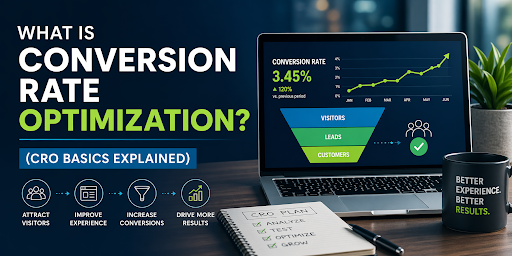
What Is Conversion Rate Optimization? (CRO Basics Explained)
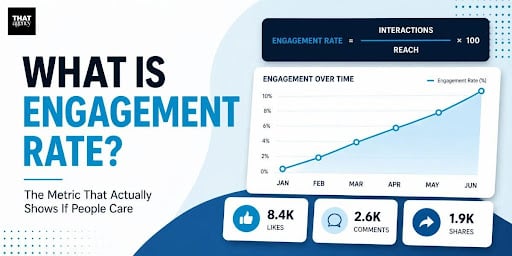
What Is Engagement Rate? (Marketing Metric Explained)

How to Appear in ChatGPT Answers: Understanding AI Citation Signals

AI-Generated SEO Content at Scale: Why Output Without Strategy Damages Authority

700 S. Rosemary Ave.
Suite 204-707
West Palm Beach, FL 33401
P: 561.832.6262
F: 561.832.7707


