

AI search visibility is already reshaping how buyers evaluate companies, and most teams are underestimating how quickly this shift is happening.
Platforms like ChatGPT and Google AI results now influence decisions before a user ever reaches your website. If your brand is missing from those answers, you are not being compared, you are being excluded.

That gap does not show up immediately in analytics, but it shows up in pipeline quality, deal velocity, and competitive pressure.
So why do some brands consistently appear while others do not?
It comes down to how clearly your business can be understood, validated, and trusted across the web.
AI search shortens the evaluation process.
Instead of reviewing multiple options, users are often presented with a small set of recommendations that already feel vetted. That changes how decisions are formed.
A few patterns emerge quickly:
For leadership teams, this affects more than traffic. It impacts how prospects enter your pipeline and how prepared they are when they do.
If competitors are consistently mentioned and you are not, they are setting expectations before your team even has a chance to engage.
AI systems are assembling answers, not ranking pages. That means your brand has to be easy to interpret, not just optimized.
When a query is submitted, the system looks for sources it can confidently reference. It needs to understand what your company does, verify that information across multiple sources, and determine whether your brand fits the intent of the question.
If that chain breaks at any point, your visibility drops.
Over time, AI systems build confidence based on repeated signals, not isolated wins. A single strong page will not carry you. Consistency across your digital footprint will.
AI systems rely on a defined set of signals to decide whether your brand should be included. These signals reinforce each other, and gaps in one area tend to weaken the rest.
The core signals include:
Each plays a different role. Together, they determine whether your brand is easy to select or easy to ignore.
Consistency acts as a baseline filter.
When your messaging shifts across your website, directories, and content, it creates uncertainty. AI systems are designed to avoid uncertainty.
If your business is described one way on your homepage, another way in directories, and a third way in blog content, that inconsistency reduces confidence.
A consistent brand, on the other hand, becomes easier to categorize and match to queries.
If you are deciding where to focus first, start here. Aligning your core message across platforms is one of the fastest ways to remove friction from AI search visibility.
Depth signals authority.
AI systems look for patterns that show repeated, structured coverage of a topic. A single mention does not carry much weight, but a connected set of content does.
When your service pages, blog content, FAQs, and supporting resources all reinforce the same subject, your brand becomes easier to associate with that topic.
A professional services firm we worked with had strong content but no structure. Their blog covered relevant topics, but each piece stood alone. After reorganizing their content into clear topic clusters tied to core services, their visibility improved without increasing output.
That shift made their expertise easier to recognize.
If your content feels scattered, that is likely limiting your visibility.
AI systems do not evaluate your content in isolation. They compare it to other sources.
When your messaging aligns with credible industry information, your brand becomes easier to trust. When it does not, your relevance drops.
This is where many companies lose ground. Content that is overly promotional, outdated, or disconnected from industry language becomes harder to validate.
A simple check can help here. If your content does not reflect how your market actually talks about a topic, it needs to be adjusted.
Alignment strengthens credibility. Misalignment quietly removes you from consideration.
AI systems need to quickly understand what your business is and when it applies.
If your positioning is too broad, you become harder to match to specific queries. That usually leads to lower visibility.
Brands that perform well in AI search tend to have:
If your business tries to appeal to everyone, it often ends up being selected by no one.
Narrowing your positioning may feel limiting at first, but it improves relevance and makes your brand easier to include in answers.
Your website alone is not enough.
AI systems look for confirmation from outside sources to strengthen trust. Mentions, backlinks, and directory listings all contribute to how your brand is perceived.
A service-based company we worked with improved its visibility by focusing on a small number of relevant placements. Instead of chasing volume, they secured mentions in industry-specific directories and a few targeted publications.
That shift helped reinforce their positioning and increased their presence in AI-generated responses tied to their niche.
The takeaway is simple. Relevance carries more weight than volume.
These signals are not independent. They build on each other.
When your messaging is consistent, your content is structured, your positioning is clear, and your authority is validated externally, your brand becomes easier to interpret and recommend.
When those elements are misaligned, AI systems hesitate.
That hesitation is enough to exclude your brand.
Most visibility gaps are not technical. They are structural.
Common issues include:
These gaps make it difficult for AI systems to define your brand. If your brand cannot be clearly defined, it cannot be confidently recommended. This directly limits your brand visibility in AI search.
The impact builds over time.
When your brand is missing from AI-generated answers:
Most companies do not connect these outcomes back to AI visibility right away. They notice slower deal cycles or lower-quality leads without seeing the underlying cause.
Improving brand visibility in AI search requires a shift in how you approach content and positioning.
Adding more content alone will not solve the problem. Alignment is what drives visibility.
If your positioning is unclear, your visibility will be inconsistent.
AI systems match brands to specific queries. Broad messaging weakens that match.
You should be able to clearly answer:
If your homepage cannot communicate that quickly, it should be your first priority.
A B2B company we worked with moved from generic consulting language to a focused positioning around operations for multi-location businesses. That change alone improved how often they appeared in relevant AI-driven queries.
Clarity improved match. Match improved visibility.
Publishing content without structure does not build authority.
AI systems look for connected coverage, not isolated posts.
Focus on building around your core services:
If your blog does not clearly support your services, it is not contributing to AI search visibility.
Your About page helps define your brand.
If it lacks clarity, your business becomes harder to interpret. Many companies focus too much on storytelling and not enough on explanation.
Your About page should make it easy to understand:
If a new visitor cannot quickly grasp your business model, AI systems likely cannot either.
Content that falls behind loses relevance.
AI systems prioritize information that aligns with current data. If your content becomes outdated, it becomes less likely to be referenced.
Focus on updating:
A simple review cycle can help maintain visibility without requiring constant new content.
External signals reinforce your positioning.
Rather than chasing volume, focus on placements that align with your industry and audience.
A small number of relevant mentions can have more impact than a large number of low-quality ones.
Structured data helps AI systems interpret your content more efficiently.
It reinforces your business details and supports how your content is categorized. While it does not replace strong messaging, it strengthens it.
If you need to focus your efforts, start here:
Trying to do everything at once often slows progress. Focus on clarity first, then build depth.
AI search visibility is becoming a dividing line.
Brands that align their messaging, content, and authority signals are gaining more exposure. Others are gradually losing relevance.
This is not a temporary shift. It is changing how buyers discover and evaluate companies.
Most leadership teams do not have visibility into how their brand appears in AI-driven results.
Without that clarity, it is difficult to prioritize what actually matters.
If you want to understand where your business stands and what is limiting your AI search visibility, THAT Agency can help you evaluate your current presence and identify the highest-impact opportunities to improve your brand visibility in AI search.
Start with clarity. Then build the system that supports it.
Tags: AI, AI Marketing, AI in digital marketing, AI in business
What Is Organic Traffic? (Complete Beginner Guide)
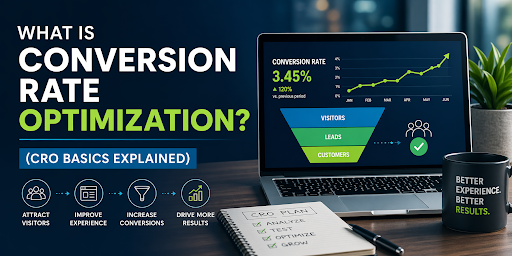
What Is Conversion Rate Optimization? (CRO Basics Explained)
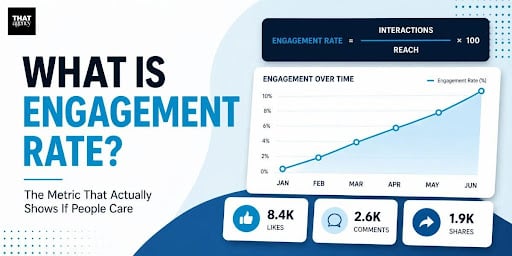
What Is Engagement Rate? (Marketing Metric Explained)

How to Appear in ChatGPT Answers: Understanding AI Citation Signals

AI-Generated SEO Content at Scale: Why Output Without Strategy Damages Authority

700 S. Rosemary Ave.
Suite 204-707
West Palm Beach, FL 33401
P: 561.832.6262
F: 561.832.7707


