

If you’re leading a growing company, you’ve probably heard some version of this recently:
“We can just spin up an AI website. It’s faster and cheaper than hiring an agency.”
On the surface, that sounds reasonable. AI website builders are everywhere right now, promising full sites in minutes and low monthly fees. For a busy decision-maker, the appeal is obvious: less hassle, lower cost, modern tech.
But if your goal is to scale marketing, improve lead quality, and get clear visibility into performance, there’s a more important question than “How cheap is the website builder?”
It’s this: “What does this website actually cost us to update, optimize, and grow over the next 12–24 months?”
That’s where the math starts to break in favor of AI-only websites, and where traditional CMS-backed websites (like WordPress or Webflow) quietly win.
At THAT Agency, we work with owners and executives like you every day, people who are open to AI, allergic to fluff, and focused on ROI. This article breaks down, in plain English, when AI website builders make sense and when they quietly become more expensive than a strategic, CMS-backed build.
Let’s simplify the landscape.
Most AI website setups fall into one of two categories:
As a business leader, you don’t care about frameworks or file structures, you care about speed, control, and cost. So let’s translate.
AI-only sites are strong at:
They’re weaker at:
Under the hood, these tools often create code-driven sites where even small content changes feel like “mini dev projects.” That doesn’t align well with a marketing mindset that relies on testing, iteration, and regular content.
A CMS (WordPress, Webflow, etc.) is designed for ongoing marketing:
It allows your agency (and even your internal team, if you choose) to:
If your website supports SEO, campaigns, and multi-location growth, this difference is huge.
You’re not making decisions on hype; you’re doing it on numbers.
So let’s look at a simple, realistic scenario:
We’ll compare two setups: an AI-only site and a CMS-backed site.
On an AI-built, code-driven site, uploading each blog is clunky. Even if the content is written, your team still has to:
A conservative estimate: about 45 minutes per blog.
That’s 0.75 hours per blog.
For 4 blogs per month:
This is pure operational cost, not strategy, not copywriting, not promotion. Just getting approved content onto the website.
On a well-structured CMS, the same workflow looks more like:
Estimate: about 15 minutes per blog, once the system is set up right.
That’s 0.25 hours per blog.
For 4 blogs per month:
That’s $280 more every month, or over $3,000 per year, for the exact same deliverable: getting four blogs live.
So when someone says, “This AI site is cheaper, the subscription is only $X/month,” your next question should be:
“What does this platform cost us in time every month?”
Because that’s where the real budget gets burned.
Most AI website marketing focuses on subscription price:
If you’re only comparing those numbers, AI looks great.
But total cost of ownership (TCO) is:
Platform fee + Time to update + Cost of missed opportunities
Let’s say:
On paper, CMS is $20–$30 more.
But from the example above, a CMS is saving you around $280/month in labor. Even if you cut that savings in half, you’re still significantly ahead.
For a leader trying to increase ROI and build a scalable marketing system, that’s the line item that matters, not who is cheapest on paper for hosting.
For someone like you, this goes beyond operational cost.
If your marketing plan includes:
…you can’t afford a platform that makes changes slow or risky. Every extra step between “idea” and “live test” is friction that reduces learning and slows growth.
A CMS-backed site supports:
In other words, it’s not just cheaper long-term, it’s more strategic.
You might be wondering:
“So does THAT Agency avoid AI entirely?”
No. We use AI where it actually helps you:
The key difference is where we deploy it.
For most of our clients, the model that wins is:
That approach lets us:
If you’d like to see how we structure that from the ground up, our web design services page is a good starting point.
There are situations where an AI-only site can be perfectly acceptable:
If you know the site will be low-change and low-impact, the cost trade-off may work in your favor.
But if your website is central to:
…then anchoring your marketing on a platform that slows updates is a risk you don’t need to take.
Before you sign off on “the new AI site,” ask your team or your agency:
“If we’re publishing four (or more) blogs a month and updating landing pages regularly, what will this platform cost us in time and money over the next year?”
If they can’t answer that clearly, or if the answer leans heavily on “we’ll just have AI do it”, that’s a red flag.
At THAT Agency, we help leaders like you build websites and marketing systems that don’t just look good at launch, but hold up under real-world use: content, campaigns, local SEO, and ongoing testing.
If you’re considering a new site or evaluating AI builders, we’re happy to walk you through a concrete, numbers-based comparison for your situation.
Tags: AI Marketing, AI in digital marketing, AI content tools, AI in business, AI Tools
What Is Organic Traffic? (Complete Beginner Guide)
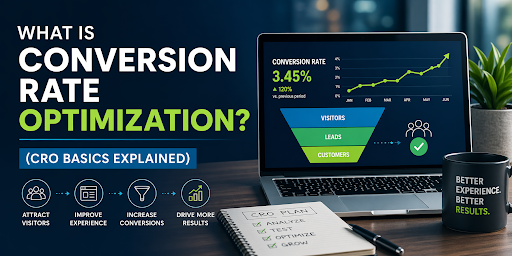
What Is Conversion Rate Optimization? (CRO Basics Explained)
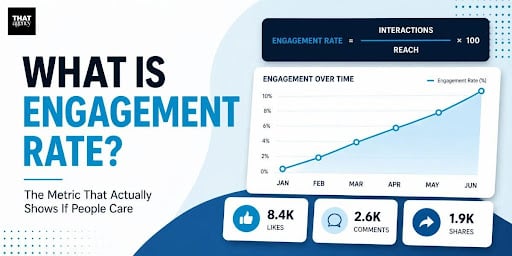
What Is Engagement Rate? (Marketing Metric Explained)

How to Appear in ChatGPT Answers: Understanding AI Citation Signals
AI-Generated SEO Content at Scale: Why Output Without Strategy Damages Authority

700 S. Rosemary Ave.
Suite 204-707
West Palm Beach, FL 33401
P: 561.832.6262
F: 561.832.7707


