

AI authority is no longer about how high you rank. It’s about whether you show up at all.
AI platforms are filtering the market before a user ever clicks a link. By the time someone reaches your website, the shortlist has already been shaped. If your brand is not part of that initial answer, you are competing from behind, regardless of how well you rank in traditional search.
This is where most companies misread the shift. They are still optimizing for position, while AI systems are optimizing for confidence.
And confidence determines selection.

A page can hold a top-three ranking and still be ignored by AI-generated results. When that happens, your visibility doesn’t just decline, it disappears at the most influential stage of the buying process, where options are first introduced and compared.
The implication is straightforward: ranking earns you a chance to be seen. Authority determines whether you are chosen.
AI authority signals decide whether your brand is included in answers, not just indexed or ranked.
That distinction changes how visibility works.
In traditional search, a strong page can drive traffic even if the rest of your presence is fragmented. In AI-driven search, everything is evaluated together: your content, your messaging, your external presence, and how consistently those elements align.
If those signals don’t reinforce each other, your brand becomes harder to trust. And if it’s harder to trust, it’s less likely to be included.
The impact shows up quickly:
Most teams don’t notice this right away. They see slower pipeline growth or declining lead quality without realizing the cause starts upstream, in visibility, not conversion.
SEO and AI visibility are not competing systems, but they operate differently.
|
SEO |
AI |
|
SEO evaluates pages. |
AI evaluates businesses. |
|
SEO rewards optimization. |
AI rewards consistency and credibility. |
|
SEO can succeed with isolated wins. |
AI requires alignment across your entire presence. |
This is why many companies with strong rankings are not showing up in AI-generated answers. Their content performs, but their overall signal is inconsistent.
From an AI perspective, that inconsistency introduces risk. And AI systems avoid risk.
AI authority is not built through a single tactic. It emerges from a set of signals working together. When those signals align, your brand becomes easier to understand and easier to trust.
When they don’t, your visibility drops; regardless of how much content you publish.
If your brand is described differently across platforms, AI systems hesitate.
That hesitation is enough to exclude you.
This shows up more often than most companies realize:
Individually, these seem minor. Collectively, they create confusion.
AI systems are trying to form a clear picture of your business. If the data doesn’t align, that picture becomes unreliable.
And unreliable sources don’t get selected.
What to do first:
This is one of the fastest ways to improve visibility because it removes friction, not adds effort.
Publishing one article on a topic does not signal expertise. It signals experimentation.
AI systems look for patterns, not one-offs. They want to see repeated, connected coverage that reinforces your position within a topic.
If your brand appears once, it’s easy to ignore.
If it appears consistently across related content, it becomes easier to trust.
This is where structure matters.
Strong topic depth looks like:
Weak depth looks like scattered blogs with no clear relationship.
The difference isn’t quality. It’s reinforcement.
What to prioritize:
Depth builds authority faster than volume ever will.
AI systems don’t just read your content, they compare it.
If your content is vague, outdated, or inconsistent with other sources, it introduces uncertainty. And uncertainty leads to exclusion.
This is where many companies fall short. Not because their content is wrong, but because it’s not specific enough to be trusted.
Generic statements don’t get used. Clear, grounded insights do.
Where to focus:
Accuracy is no longer just about credibility. It directly impacts whether your content is usable.
AI systems evaluate the business behind the content, not just the content itself.
If your experience is not visible, your authority is limited, regardless of how strong your insights are.
This is where many strong companies lose ground. They have the experience, but they don’t communicate it clearly.
Signals that strengthen credibility:
If these elements are weak or missing, AI systems have less confidence in recommending you.
What to fix:
Experience only builds authority when it’s easy to verify.
AI systems trust what others say about you more than what you say about yourself.
If your brand only exists on your own website, it lacks external validation. That limits how confidently it can be included in answers.
External signals provide that validation:
Not all mentions carry equal weight. A few strong, relevant placements will outperform dozens of low-quality ones.
What to prioritize:
Validation strengthens trust. And trust drives inclusion.
Each signal plays a role, but the impact comes from alignment.
When these signals support each other, your brand becomes easier to interpret and easier to select.
When they conflict, your visibility drops; even if individual pieces are strong.
This is where competitive advantage is created. Most companies treat these as separate efforts. The ones that align them build momentum.
AI systems are designed to minimize risk.
If your content appears inconsistent, overstated, or unclear, it’s not penalized; it’s simply ignored.
That distinction matters.
Most companies assume poor performance means they need more content. In reality, they need more clarity.
Strong signals share common traits:
If your messaging requires interpretation, it creates friction. And friction leads to exclusion.
Most teams try to improve everything at once. That slows progress and creates more inconsistency.
Instead, focus on sequence.
This order matters. Skipping steps creates gaps that limit everything else.
AI authority does not show up in a single metric. You have to look at patterns.
Start with direct testing.
Run prompts like:
Track:
Over time, you should see increased inclusion, stronger positioning, and more consistent visibility.
That’s the signal your authority is improving.
AI authority signals are shaping how decisions are made, not just how content is discovered.
If your brand is not recognized as a trusted source, you are competing at a disadvantage before the conversation even begins.
The opportunity is still open. Most companies have not adapted their strategy yet.
The ones that do will control more of the buying journey, before a prospect ever visits a website.
If you want to understand where your brand stands today, start with visibility, not traffic.
Look at how AI systems interpret your business, where your signals are misaligned, and what is limiting your inclusion.
That clarity is what turns activity into authority, and authority into pipeline.
Ready to see where your brand stands in AI search? Contact THAT Agency to request an AI visibility audit.
Tags: AI, AI Marketing, AI in digital marketing, AI marketing strategies
What Is Organic Traffic? (Complete Beginner Guide)
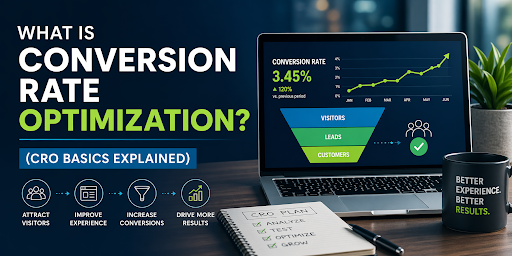
What Is Conversion Rate Optimization? (CRO Basics Explained)
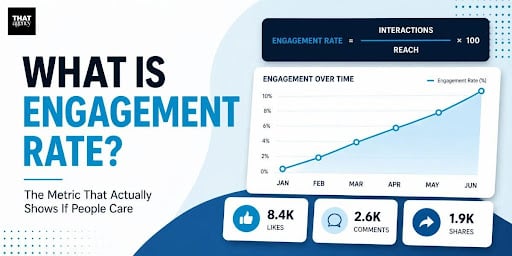
What Is Engagement Rate? (Marketing Metric Explained)

How to Appear in ChatGPT Answers: Understanding AI Citation Signals

AI-Generated SEO Content at Scale: Why Output Without Strategy Damages Authority

700 S. Rosemary Ave.
Suite 204-707
West Palm Beach, FL 33401
P: 561.832.6262
F: 561.832.7707


